
What Kevin Warsh's Fed Leadership Could Mean for Financial Markets
The Federal Reserve occupies a central position in both the economy and financial markets, a role that has expanded considerably over recent decades. From the 2008 global financial crisis through the inflationary pressures of recent years, investors have scrutinized every Fed decision with great care. It follows naturally that changes in Fed leadership draw significant attention from investors and the general public alike. At the same time, understanding the boundaries of what the Fed can and cannot influence remains essential for long-term investors.
Kevin Warsh, an experienced policymaker who served on the Fed's Board of Governors during the global financial crisis, has been confirmed by the Senate as the new Fed Chair.1 Markets have largely responded positively to his nomination, viewing him as a familiar figure with deep knowledge of both the Fed and monetary policy. What are the potential implications for Fed policy and investor portfolios in the years ahead?
Economic growth has persisted across multiple Fed leadership eras
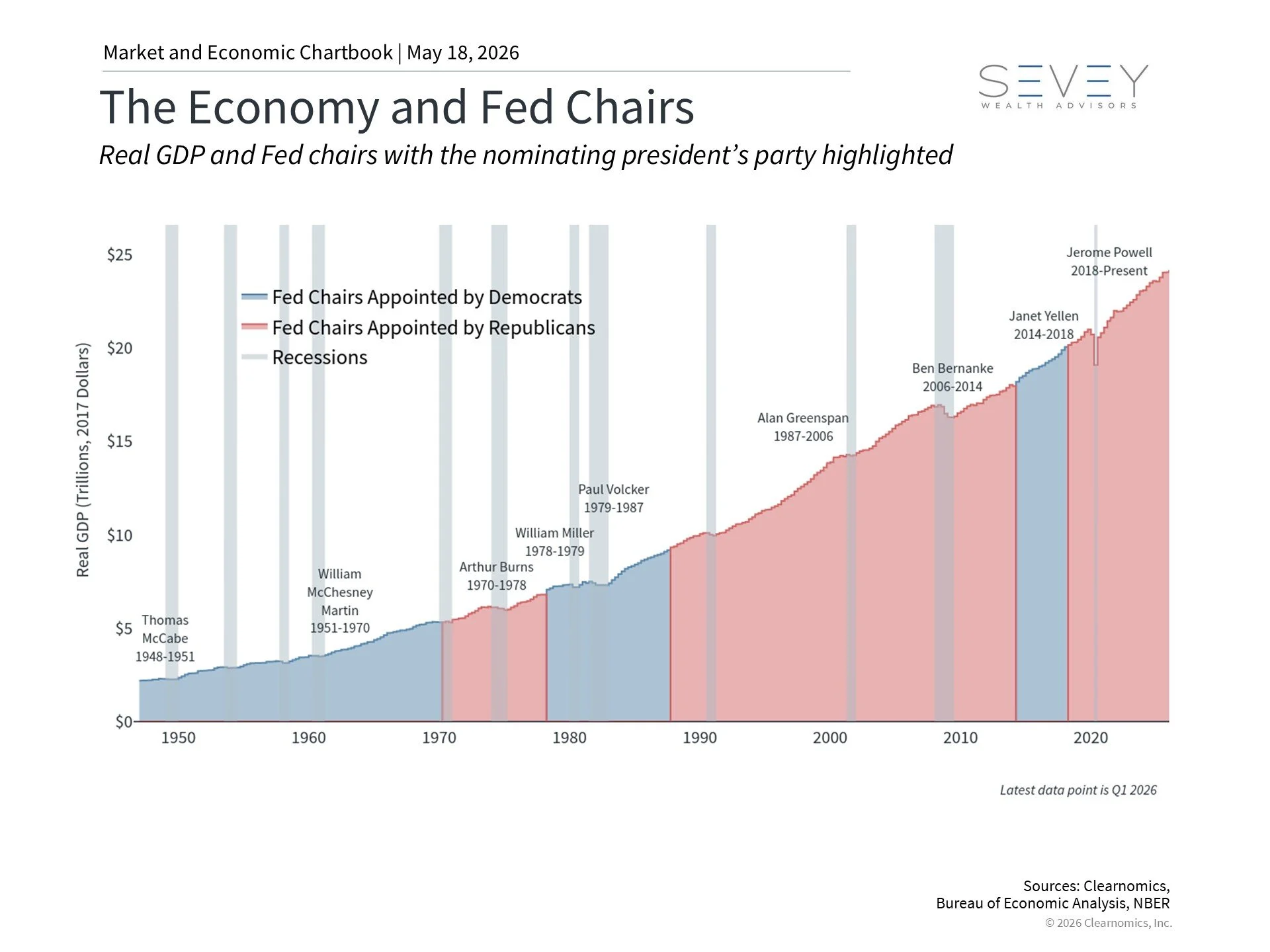
Because Fed leadership transitions are relatively rare, it is worth taking a step back for broader perspective. The Chair of the Federal Reserve serves a four-year term following a presidential nomination, while members of the Board of Governors serve rotating 14-year terms. This structure exists primarily to insulate monetary, regulatory, and supervisory decisions from political pressures, a principle commonly referred to as "Fed independence," which has been both tested and debated throughout history.
As shown in the accompanying chart, the U.S. economy has expanded across the tenures of multiple Fed chairs, regardless of which president appointed them. Paul Volcker, Alan Greenspan, Ben Bernanke, Janet Yellen, and Jerome Powell each confronted distinct economic challenges, ranging from stagflation in the 1970s and early 1980s to the global financial crisis, the pandemic, and the most recent inflation surge. Throughout these periods, the Fed was required to respond to evolving circumstances, at times deploying its policy tools in entirely new ways.
The Fed and interest rates represent only one piece of the broader economic puzzle. The Federal Reserve Reform Act of 1977 established a "dual mandate" to promote maximum employment and stable inflation, ideally resulting in predictable long-term borrowing costs for consumers, businesses, and the government.
Nevertheless, despite the weight markets often place on Fed actions, the central bank does not control every aspect of the economy. Many of its tools, including the federal funds rate, are widely regarded as blunt instruments that operate with what economists describe as "long and variable lags." Economic shocks, technological change, demographic shifts, and global developments all play meaningful roles. For instance, the Fed can respond to rising gasoline prices or the effects of artificial intelligence on labor markets, but it cannot control those forces directly.
For investors, the key implication is that while the Fed plays an important role and interest rates do affect many segments of the economy and financial markets, placing too much emphasis on each individual Fed decision can lead to losing sight of the bigger picture. Focusing instead on the underlying market and economic drivers that the Fed is navigating can help investors maintain a long-term perspective.
Warsh's preference for a more narrowly focused Fed
Like all government institutions, the Fed is imperfect and does not have a crystal ball for predicting where the economy is headed. In making its decisions, the Fed relies on the same publicly and privately available economic data used by all economists. Criticism of the Fed, both in terms of specific policy choices and its broader institutional role, is therefore a natural occurrence. As with all aspects of investing, setting politics aside to distinguish what the Fed might actually do from what one believes it should do is often an important discipline.
In his recent Senate testimony, Warsh stated that he favors "a clearer, cleaner match between the Fed's powers and responsibilities," suggesting a preference for a more focused central bank.2 He also emphasized that "monetary policy independence is essential" and that policymakers must act in the nation's interest. Historically, Warsh has been regarded as an "inflation hawk," meaning his policy inclination would be to lean toward higher interest rates to prevent inflation from rising, along with promoting institutional reform at the Fed.
From an investment standpoint, at least three implications emerge from his views. First, it will take time to fully understand how Warsh's current positions will shape policy in this inflationary environment, particularly if they come into conflict with the White House's preference for lower rates. He may need to address this challenge as early as his first press conference, given that elevated oil prices will factor into upcoming Fed decisions.
This would not, however, be the first time tension has emerged between the executive branch and the Fed. Elected officials have historically preferred lower interest rates to stimulate the economy, and conflicts have arisen on multiple occasions. Notable examples include disagreements between President Lyndon B. Johnson and Fed Chair William McChesney Martin Jr., Ronald Reagan and Paul Volcker, and most recently between Donald Trump and Jerome Powell, among others. Such tensions have occurred even when the sitting president appointed the Fed Chair.
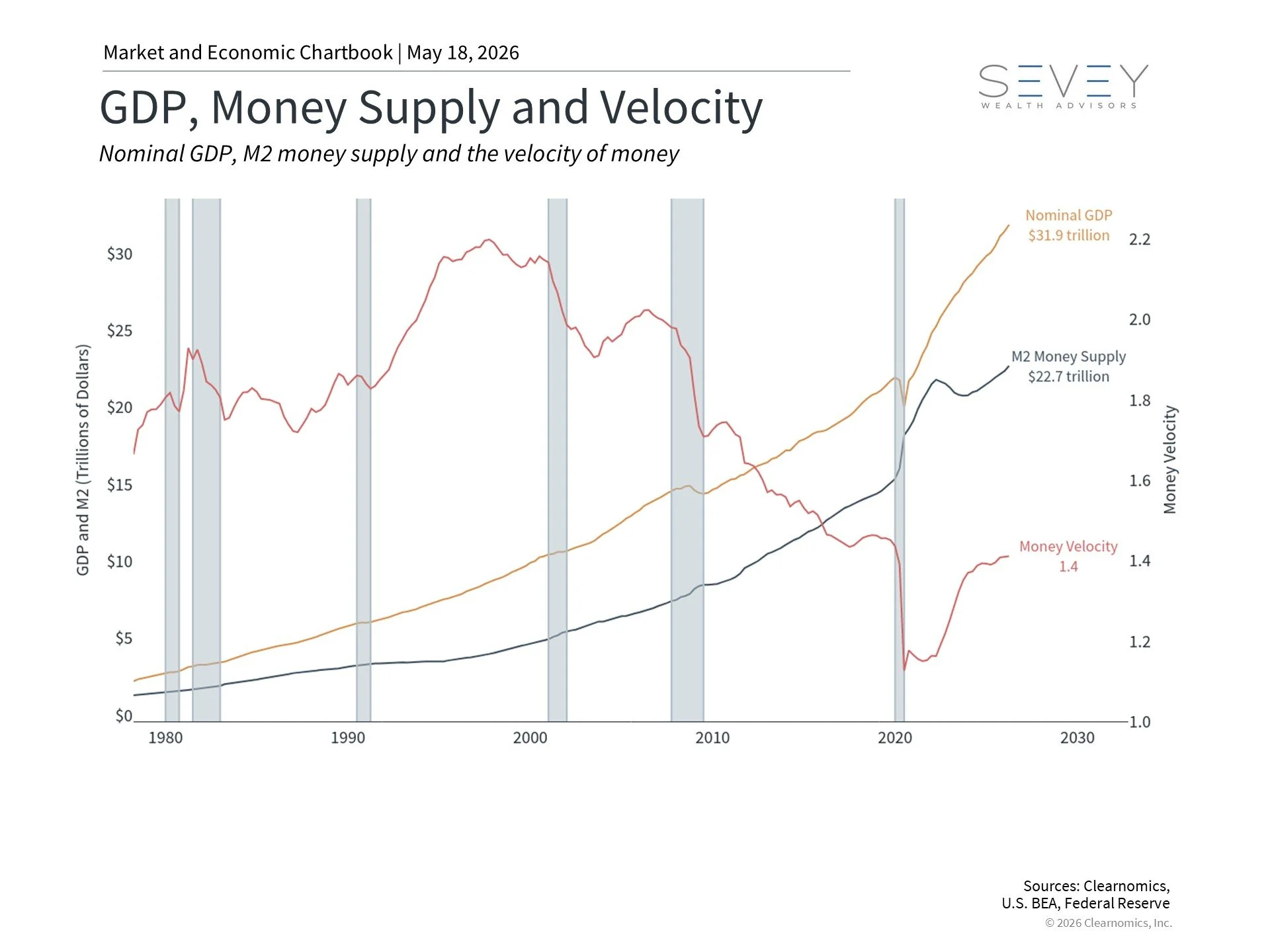
Inflation and the money supply add complexity to Fed decision-making
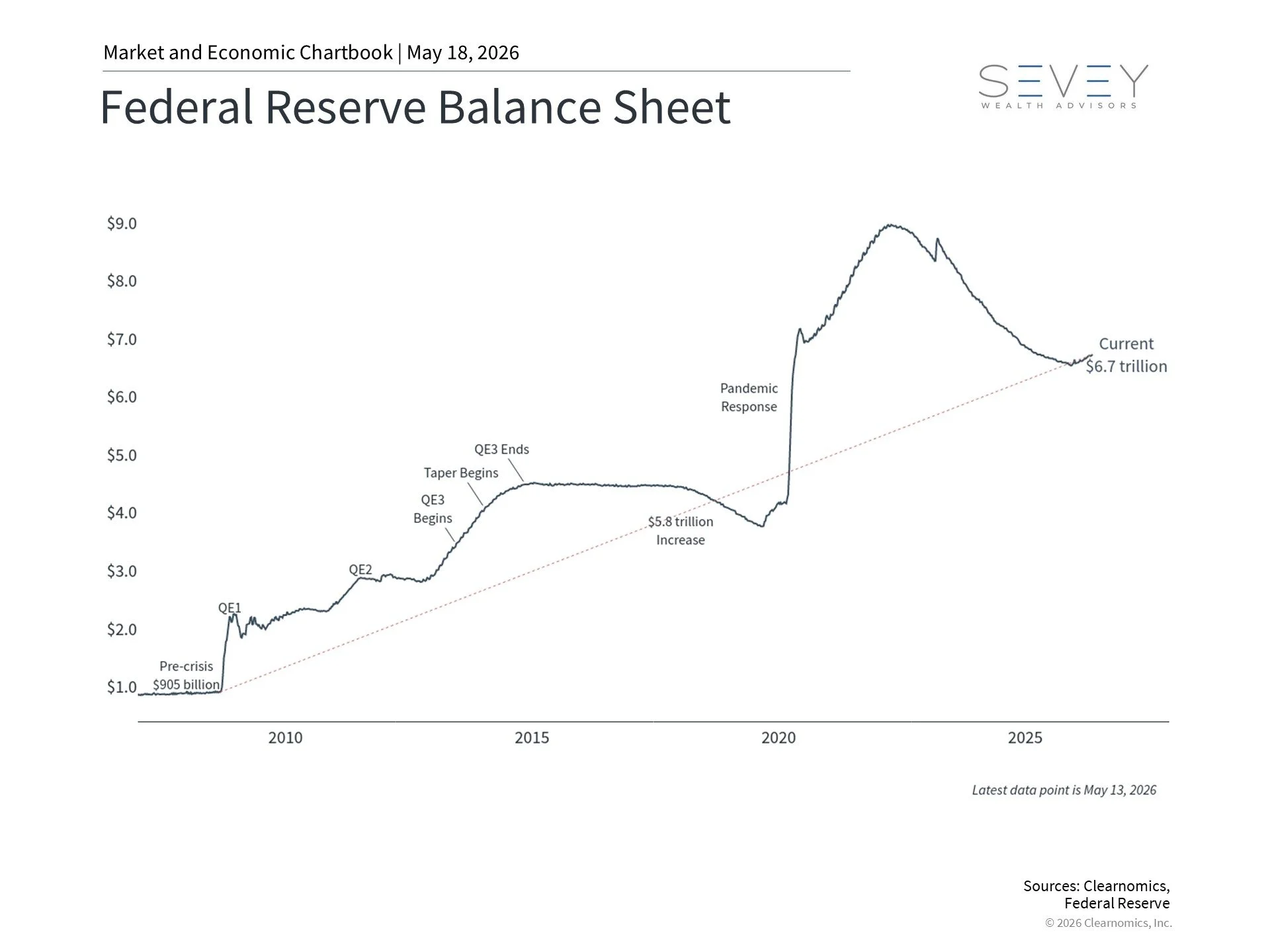
Second, while Warsh has expressed concern about the Fed overreaching into areas such as green initiatives and social policy, he has not called for sweeping changes to the institution's core functions. In particular, Warsh has indicated that crisis-era actions such as the expansion of the Fed's balance sheet were appropriate, a view shaped in part by the fact that he was present when many of those decisions were made.3
What he does argue is that the Fed should "retrace its steps" once conditions normalize and a crisis has passed. In other words, the Fed's balance sheet, which remains substantial at $6.7 trillion, is not where it should be now that both the 2008 financial crisis and the pandemic are well in the past. In theory, reducing the balance sheet tightens financial conditions, as it involves either selling or reinvesting less each month in Treasury securities and mortgage-backed securities. This process is commonly referred to as "quantitative tightening," the counterpart to the easing undertaken during crisis periods. Shifts in this policy can have meaningful effects on bond prices, mortgage rates, and corporate borrowing costs.
Third, Warsh has argued that Fed policy, particularly since the pandemic, has contributed to the growth of the federal deficit and national debt. Consistent with his views on the balance sheet, he contends that while spending may be warranted during recessions, the approach should be symmetric, and monetary policymakers should avoid weighing in on fiscal matters.
Of course, the Fed does not directly control federal spending, and it remains unclear what the new Fed Chair could do differently to influence budgets passed by Congress. To the extent that the Fed does comment on the size of the budget deficit, it would likely do so through guidance or by managing interest rates. For investors, this is yet another reason why policy rates may continue to depend on a wide range of factors in the coming years.
The new Fed Chair steps into a particularly challenging economic environment. Inflation has picked up in recent months due to higher oil and gasoline prices, driven by the war in Iran. Headline CPI stood at 3.8% year-over-year as of April 2026, with core CPI at 2.8%, both remaining above the Fed's 2% target.
This has created a difficult policy backdrop. While many at the Fed and in markets had previously anticipated further rate cuts, fed funds futures now reflect the possibility that the Fed may need to consider a rate increase by early 2027. These market expectations should be interpreted with caution, as they shift frequently in response to new economic data and global events. Even so, they underscore the uncertain path ahead for monetary policy.
For investors, the most important takeaway is that markets and the economy have performed well across many different Fed leadership transitions and policy environments. Changes at the top of the Fed naturally introduce uncertainty, but they rarely alter the long-term fundamentals that drive financial markets. Earnings growth, productivity, demographics, and innovation remain the most important drivers of long-run returns.
The bottom line? As Kevin Warsh assumes the role of Fed Chair, maintaining perspective on the Fed's true influence is essential. Ultimately, keeping sight of the longer-term drivers of markets and the economy is the most effective approach to achieving financial goals.
References
1. https://www.senate.gov/legislative/LIS/roll_call_votes/vote1192/vote_119_2_00120.htm
2. https://www.banking.senate.gov/imo/media/doc/warsh_testimony_4-21-26.pdf
4. Ibid.
